
Adaptating TAPE for assessing agroecology in TAPELINE territories
In order to assess the level of development of agroecology in the five European territories participating in the TAPELINE project, the criteria for evaluating the level of agroecology implementation (Step 1—CAET) and the performance indicators (Step 2 – KPIs) were discussed, while ensuring consistency with the method’s global framework.
European-level adaptations
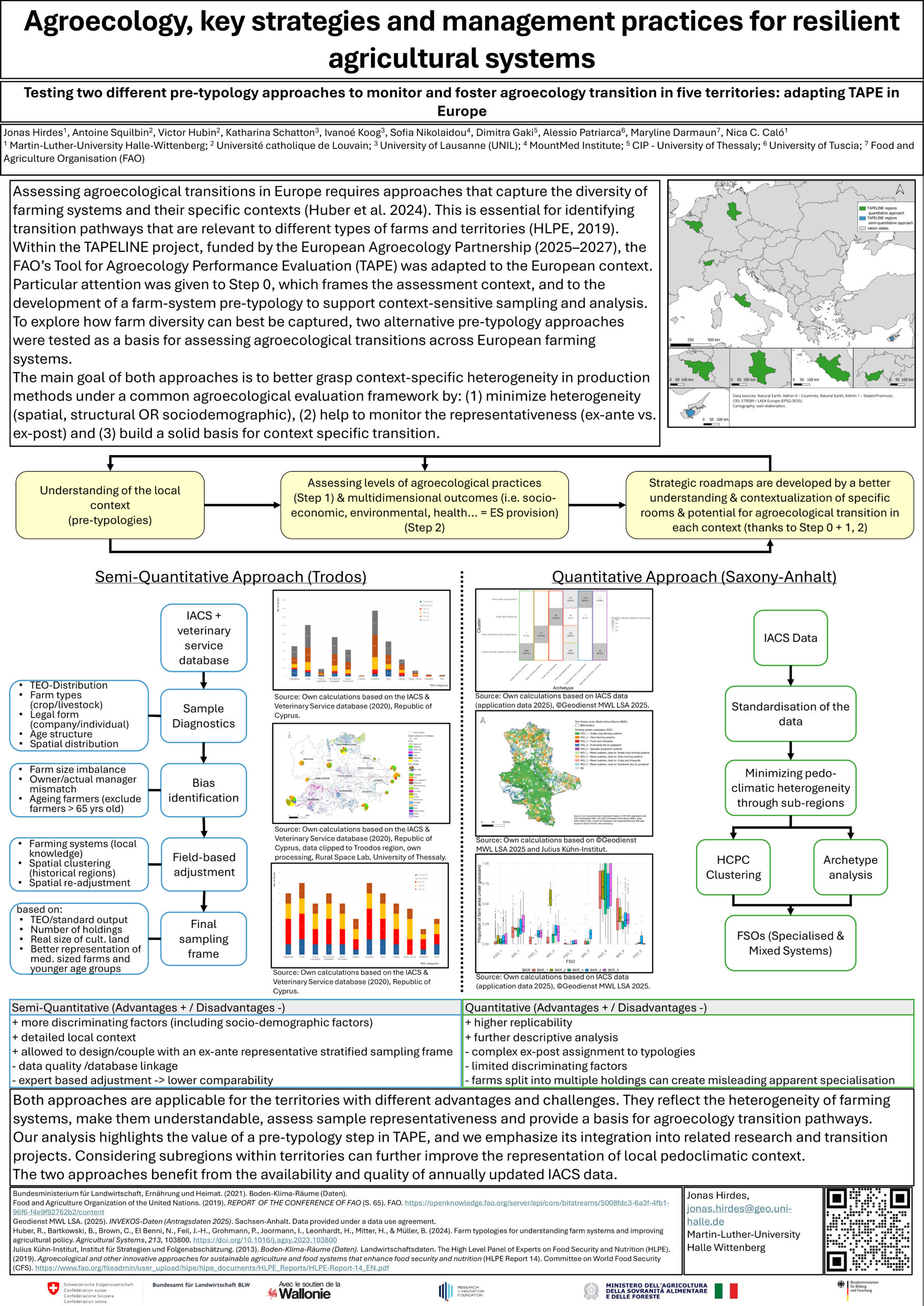
Step 0 - Farming System Orientations
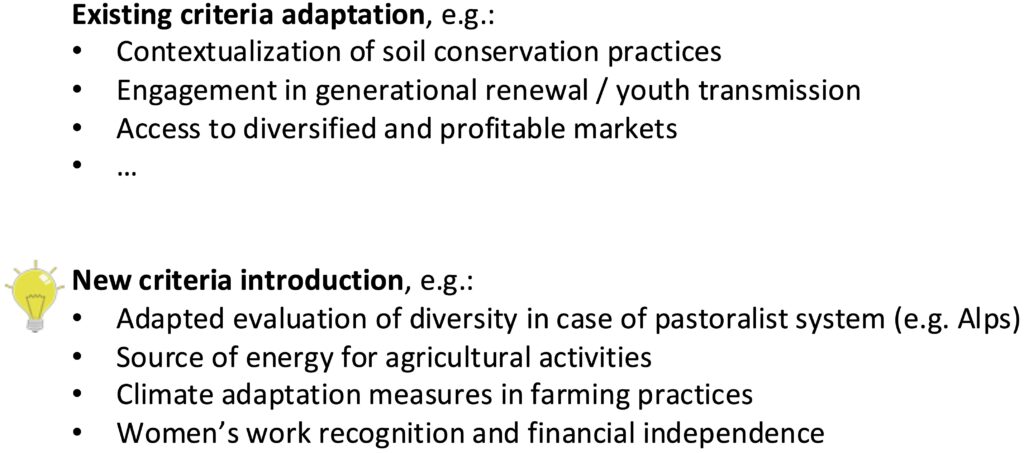
Step 1 adaptations - Highlights
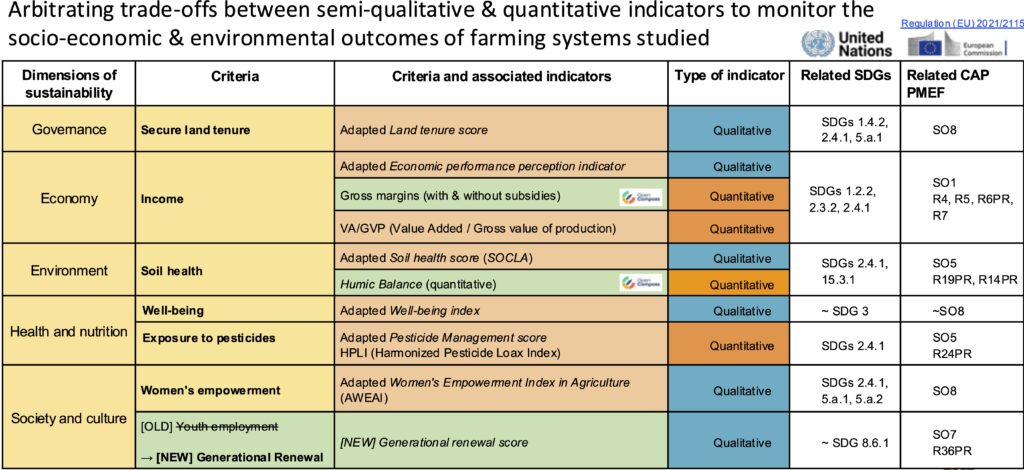
Step 2 adaptations - Highlights
TAPE questionnaire adapted to assess european farming systems
Advanced adaptations per territory
To account for data collection challenges & specific farming context met in TAPELINE territories, academic teams provided some aditionnal suggestions of adaptations to the TAPE indicators, piloted with farmers and before being enlarged to a wider and representative sample.
Saxony-Anhalt
Soil health indicator (SOCLA)
- Soil structure: we ask the farmers to assess their soil structure (aggregates, rooting possibility or porosity)
- Soil compaction: Do you have problems with soil compaction, such as plow pans?
- Soil depth: how deep is your soil, how deep can roots grow? (less 30cm – more than 1 metre)
- Status residues: when you apply organic material, how long does it take to decompose? (more than a year – quite quickly)
- Color, odor, and organic matter: perceptible content of organic matter by smell, color
- Water retention: how would you describe your field’s water-holding capacity (dry /does not hold water – good amount of water for a reasonable time)
- Soil cover: → Approximated by practiced evaluated in Step 1
- Erosion: how would you describe the degree of erosion on your fields? (severe erosion signs – no visible signs of erosion)
- Presence of invertebrates: How evident are the signs and presence of earthworms? (no signs – abundant presence)